



Modestas is an experienced iGaming analyst focused on crash mechanics, betting systems, and player engagement strategies. He explores game volatility, fairness algorithms, and payout dynamics. His favorite title is Aviator, which he admires for its mix of simplicity, excitement, and the thrill of timing every flight just right.
Aviator Game Strategy Casino Guide for Free
Aviator Strategy is less about “beating” the game and more about making better decisions around stakes, cash-out timing, and session control. Aviator is a fast crash-style title, so small choices compound quickly, especially when you play multiple rounds in a row.
Play DEMO
Play with real money

Contents
- 1 Understanding Aviator: Rules, Mechanics, and Origins
- 2 Why Players Use Strategy in a Chance-Based Game
- 3 Low, Medium, and High Risk Approaches for Aviator
- 4 Expert Tips to Play Aviator With More Control
- 5 Fairness, Legality, and Age Checks Before Playing Aviator
- 6 Responsible Gambling: A Realistic Warning
- 7 FAQ: Quick Answers About Playing Aviator
Understanding Aviator: Rules, Mechanics, and Origins
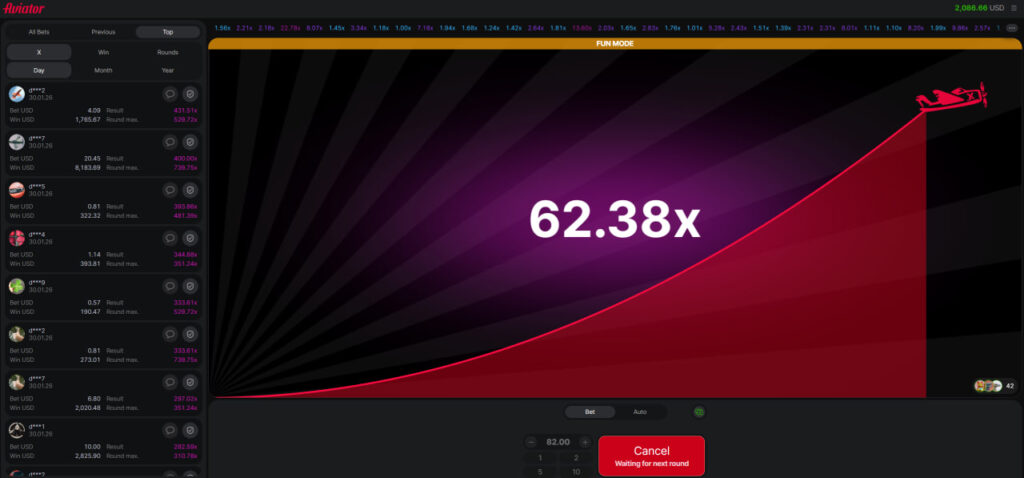
Aviator is a multiplayer crash game where a plane takes off and a multiplier rises in real time. Your goal is simple: cash out before the plane flies away (the “crash”). If you cash out in time, your payout is your stake multiplied by the cash-out multiplier. If the round crashes first, that bet is lost.
Most versions let you place one or two bets per round, which is a big part of the game’s appeal. You can use different cash-out plans on each bet, such as one conservative cash-out and one higher target, to balance risk inside a single round. The interface typically shows the current multiplier, recent results, and a live feed of cash-outs, which can make the game feel more “social” than a solo slot spin.
- Place your stake (often you can place two separate bets).
- The round starts and the multiplier begins to climb from 1.00x upward.
- You can cash out manually at any moment, or set an auto cash-out in advance.
- If you cash out before the crash, your win = stake × multiplier.
- If the crash happens before you cash out, you lose that stake for the round.
Two features matter for beginners. First, auto cash-out can remove hesitation, which is one of the biggest sources of “I should have cashed out” frustration. Second, the optional second bet lets you experiment with split-risk thinking: one bet can aim for frequent small wins, while the other takes a swing at higher multipliers without risking the whole round.
Aviator is widely associated with the “Turbo Games” category popularised by its developer, SPRIBE. The studio’s own timeline describes Aviator going live in early 2019, with later certification milestones the same year. Another official update notes the first public launch taking place in February 2019.
Why Players Use Strategy in a Chance-Based Game
Aviator casino is still a game of chance. Each round’s crash point is determined by the game’s underlying randomisation and you can’t know it in advance. What you can control is how much you stake, how you split two bets, when you cash out, and when you stop.
That’s why players talk about patterns, discipline, and “systems.” A practical Aviator Strategy gives you a framework to manage volatility, reduce emotional decisions after a loss, and keep sessions within a budget. It won’t change the mathematical edge, but it can change how long your bankroll lasts and how consistently you stick to your plan.
It also helps to understand what “strategy” means here. You are not selecting hands like poker or making long-term EV calculations like sports betting. You are managing variance in a rapid loop: round, decision, outcome, repeat. In that environment, the most expensive mistakes are usually behavioural, such as chasing after a crash, doubling without a cap, or abandoning limits because a big multiplier “must be due.”
Low, Medium, and High Risk Approaches for Aviator
Risk level in Aviator usually comes down to two levers: how aggressive your cash-out targets are, and how quickly you scale your stake after wins or losses. Lower targets tend to cash more often but return less per win; higher targets can pay big but hit less frequently.
The point of any Aviator Game Strategy is bankroll management, not prediction. You are choosing how you ride variance, not altering what the next crash will be. The multiplier ranges below are practical targets players often use, not guarantees about how long a round will last.
| Risk level | Typical multiplier range | Recommended bankroll size | Example strategies |
| Low | 1.10x–1.70x | 80–150+ units | Flat betting, tight stop-loss, two-bet split (one auto cash-out) |
| Medium | 1.70x–4.00x | 120–250+ units | Ladder staking, Paroli (positive progression), mixed cash-out targets |
| High | 4.00x–20.00x+ | 200–500+ units | Martingale (high risk), Labouchere, “one small + one moonshot” split |
Low risk: protect the bankroll first
Low-risk play focuses on frequent, modest cash-outs. Many players set an auto cash-out around 1.20x–1.50x on at least one bet and keep stakes small relative to bankroll.
This style tends to feel “steady,” but it still has losing streaks. The advantage is psychological: it’s easier to follow limits and avoid chasing, because you’re not waiting for a rare high multiplier to save the session. The trade-off is that you will also have many “could-have-been” moments when the multiplier keeps climbing after you cash out, and you need to be comfortable with that.
Medium risk: balance frequency and upside
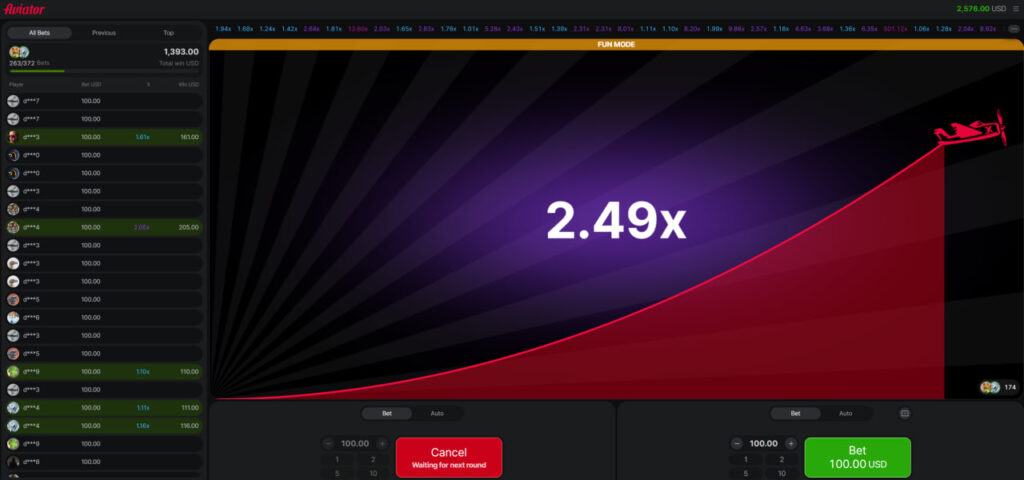
Medium risk sits in the middle: higher cash-out targets, but not extreme ones. Players often combine a conservative first bet with a second bet aiming for a larger multiplier, or they use a ladder that nudges stake size up after wins and down after losses.
For many people, this is where Aviator Strategy becomes most useful. You have enough upside to make wins meaningful, but enough structure to avoid swinging your whole session on one round. If you do increase stakes, keep the steps small and pre-defined so a short run of losses doesn’t force you into bets that feel uncomfortable.
High risk: big multipliers and big swings
High-risk play is all about chasing larger multipliers, and it usually comes with staking systems that escalate quickly. Martingale-style approaches, for example, increase the next stake after a loss to try to recover losses with a single win, but that can explode your required bankroll in a short sequence.
If you choose a high-risk approach, treat it as a controlled experiment with strict limits. High targets can land, but they do so unpredictably, and they can also encourage “one more try” thinking that burns through a bankroll fast. In practice, high-risk play is best reserved for small stakes, short sessions, and rules that force you to stop before escalation takes over.
Expert Tips to Play Aviator With More Control
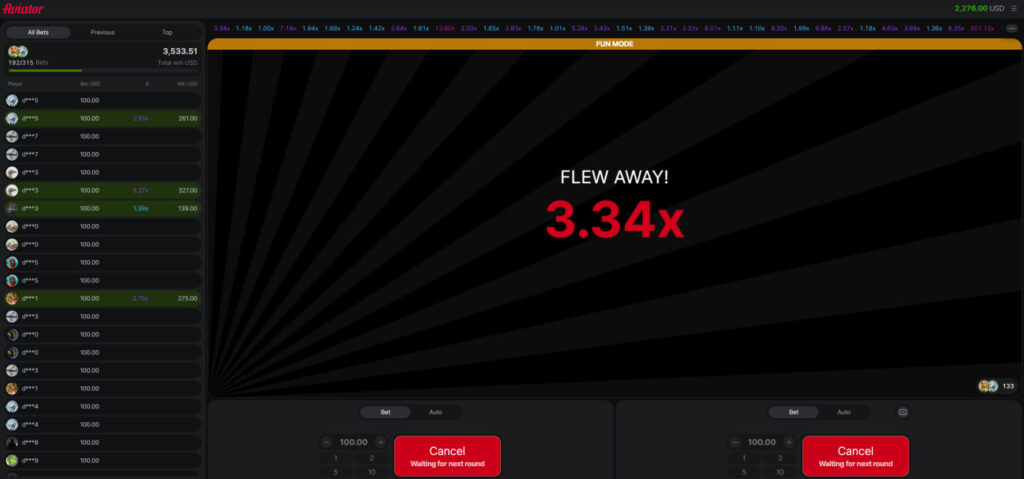
A clean Aviator Strategy starts with habits, not formulas. The game moves quickly, so your best edge is preparation: know your limits, know your cash-out plan, and don’t improvise mid-session. Before risking money, spend real time in demo mode to understand pace, UI options like auto cash-out, and how your emotions react to streaks.
- Decide your session bankroll first (a separate amount you can afford to lose), and split it into fixed unit sizes.
- Use demo mode to test two-bet setups and find cash-out targets you can stick to under pressure.
- If you use a progression system, cap the number of steps and reset after a win or after a fixed loss limit.
- Prefer simple rules you can follow when tilted: flat betting plus a stop-loss beats a complex plan you abandon.
- Track outcomes over at least 100–200 rounds before you judge whether an Aviator Game Strategy “fits” your style.
- Take breaks. Fast rounds encourage autopilot, and autopilot is where budgets get ignored.
- Set an auto cash-out on at least one bet if you know you tend to hesitate or “wait a second longer.”
Fairness, Legality, and Age Checks Before Playing Aviator
Aviator is typically presented as an RNG-based crash game with added transparency features. On many platforms, it supports a provably fair setup, which lets you verify each round after it ends rather than relying on blind trust.
In simple terms, provably fair systems use cryptographic “seeds” and a round counter (nonce). The game commits to a server seed (often via a hash), then combines it with a player seed to generate the crash point. After the round, the server seed can be revealed so the result can be independently checked. Look for options like “Fairness,” “Verify,” or “Seeds,” and confirm you can view the data needed to reproduce outcomes.
Legality is location-specific. Some countries regulate online gambling through licensing, others restrict it heavily, and availability online doesn’t automatically mean it’s legal where you live. Before playing for real money, check your local rules and the operator’s licensing details.
Age requirements also depend on jurisdiction. In many places, the minimum age for online gambling is 18, though some regions apply higher thresholds for certain gambling products. Expect identity and age verification, and don’t play if you’re under the legal minimum for your country.
Responsible Gambling: A Realistic Warning
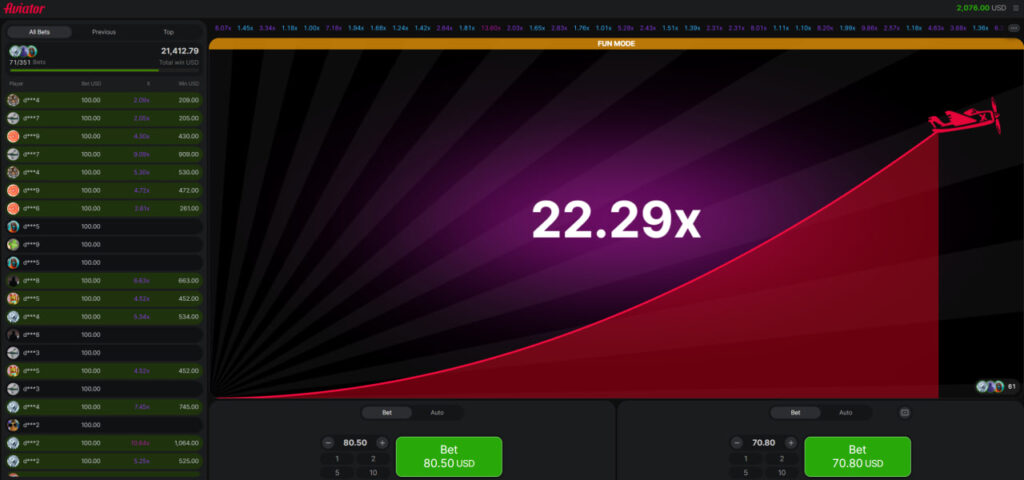
No system can guarantee profit in Aviator, and no “method” changes the random crash point. Use strategies as guardrails for budgeting and behaviour, not as promises about results.
Set clear limits on time and money, stop when you hit them, and don’t try to win back losses by raising stakes. A simple rule like “end the session after X units lost or after Y minutes” is often more effective than any staking pattern because it targets the real risk: staying in the game when judgment fades.
If gambling stops being fun, feels compulsive, or causes financial stress, pause and consider support resources such as GambleAware or National Council on Problem Gambling.
FAQ: Quick Answers About Playing Aviator
They “work” only in the sense that they help you manage money and decisions. A clear plan can reduce reckless staking and help you stick to limits, but it cannot influence or predict the crash point.

Modestas Mankus
Last updated: 10.03.2026