



Modestas is an experienced iGaming analyst focused on crash mechanics, betting systems, and player engagement strategies. He explores game volatility, fairness algorithms, and payout dynamics. His favorite title is Aviator, which he admires for its mix of simplicity, excitement, and the thrill of timing every flight just right.
How to Play Aviator Game – Rules and Tips in India
How to play Aviator is one of those things you can learn in a minute, but still keep improving round after round. Aviator is a fast “crash” style game where a multiplier starts at 1.00x and climbs higher as a plane takes off. Your goal is simple: cash out before the flight ends. If you cash out in time, your payout equals your bet multiplied by the number you locked in.
Play DEMO
Play with real money

What makes Aviator so popular is the combination of speed, suspense, and control. Every round lasts only a few seconds, and you’re constantly balancing risk versus reward. It’s also easy to follow even if you’re new to online games, which is a big reason it has taken off across India.
Contents
- 1 Aviator Gameplay Basics (What Happens Each Round)
- 2 Key Features That Define Aviator
- 3 Step-by-Step: Starting Aviator From Scratch
- 4 Basic Strategies Beginners Commonly Try
- 5 Provably Fair, Explained Simply (Plus the Legal Angle)
- 6 Responsible Gambling: Keep It Fun, Keep It Controlled
- 7 FAQ: Quick Answers About Aviator Gameplay
Aviator Gameplay Basics (What Happens Each Round)
Aviator runs in short rounds that repeat continuously. Before each round begins, you place a bet. Once the round starts, the multiplier rises smoothly from 1.00x upward while the plane keeps “flying.” At any time, you can press Cash Out to secure your winnings based on the current multiplier.
The key moment is the “crash” point, when the flight ends and the multiplier stops instantly. If you haven’t cashed out before that moment, you lose the bet for that round. That’s the whole game loop: bet → multiplier rises → cash out (or risk it) → new round.
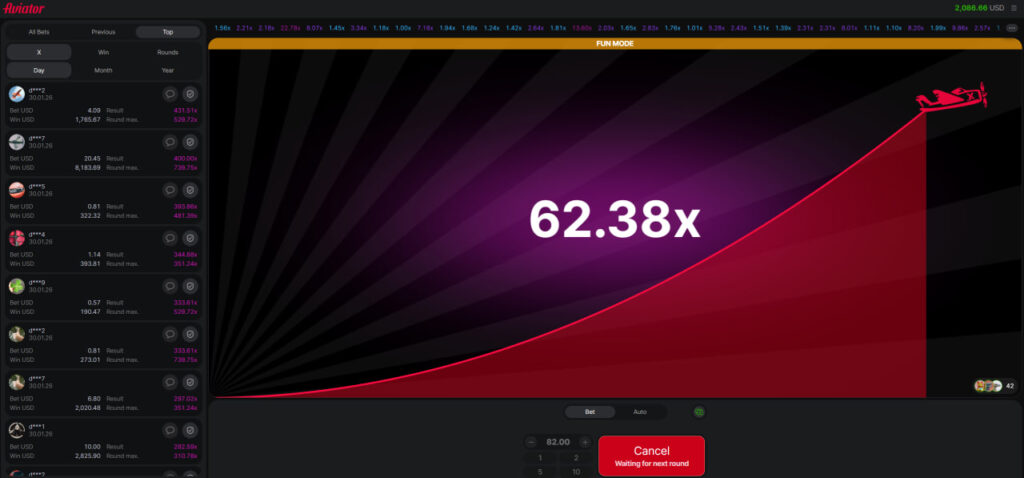
If you’re used to quick casino-style titles like a ball that drops through pegs or tiles and lands on a payout, Aviator will feel familiar in pace, but different in decision-making. Instead of waiting for a ball to finish its path, you actively choose when to lock your result. For beginners asking how to play Aviator game, this “timing choice” is the one mechanic to master first.
Key Features That Define Aviator
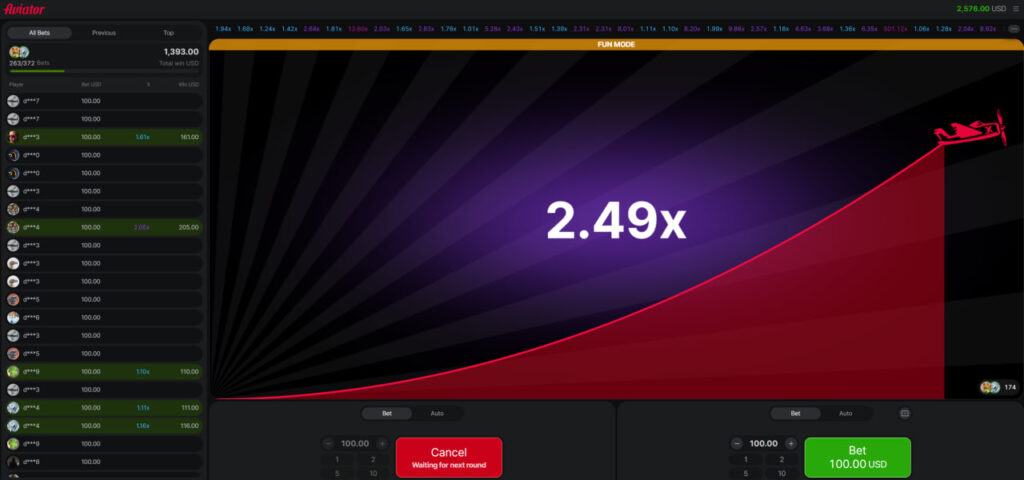
Aviator is built around a few core features that make gameplay feel interactive rather than passive. Here’s what you’ll normally see inside the game interface:
| Feature | What it does | Why it matters |
| Rising multiplier | Starts at 1.00x and increases until the round ends | The higher it goes, the bigger the potential payout |
| Cash Out button | Lets you lock in winnings at the current multiplier | Your main decision point every round |
| Auto Cash Out | Automatically cashes out at a multiplier you set | Useful for consistency and discipline |
| Two-bet option | Lets you place two separate bets in the same round | Helps you split risk (one safe, one aggressive) |
| Recent round history | Shows the multipliers from previous rounds | Helps you stay aware of volatility (without “chasing”) |
| Live pace rounds | Rounds run back-to-back with minimal downtime | Great for quick sessions, but can also tempt overspending |
| Simple stake controls | Adjust bet size with +/- or quick values | Keeps decisions fast and beginner-friendly |
| Provably Fair access | Some versions include a verification screen | Adds transparency about how outcomes are generated |
A helpful mindset: Aviator isn’t about predicting a “pattern.” It’s about managing timing, discipline, and risk in a game that moves quickly.
Step-by-Step: Starting Aviator From Scratch
Getting into Aviator is straightforward, but doing it properly matters. This quick walkthrough on how to play Aviator game covers the full path from account setup to your first round, including the basics you’ll need if you want to understand how to play Aviator online safely.
- Create an account on a licensed casino platform
Choose a regulated site that clearly displays its licensing details and terms. Complete the registration form, set a strong password, and confirm your email or mobile number if required. - Complete account verification (KYC)
Most platforms ask for identity checks before withdrawals (and sometimes before deposits). Upload the requested documents and make sure your personal details match your proof exactly. This step reduces payout delays later. - Add funds using your preferred payment method
Deposit an amount that fits your comfort zone. Beginners often do better by starting small until they understand how fast rounds move. If you’re playing from India, double-check whether your chosen payment option is supported and processed smoothly on that specific site. - Find Aviator in the casino lobby
Use the search bar and type “Aviator,” or browse the “Crash Games” / “Instant Games” category. Open the game and allow it a few seconds to load. - Set your bet and (optional) Auto Cash Out
Pick a stake size. If you want extra control, set an Auto Cash Out value like 1.50x–2.00x to avoid hesitation or late clicks. You can also choose to place two bets if the interface allows it. - Play a few “observation rounds” before committing
Watch 5–10 rounds to understand the rhythm. Then place your bet before the next round begins, and decide when to cash out once the multiplier rises.
That’s it. After a couple of sessions, you’ll start to feel the pace and learn what cash-out points match your risk tolerance.
Basic Strategies Beginners Commonly Try
Aviator is still a game of chance, but the way you structure bets can help you manage risk and avoid emotional decisions. Below are some common approaches players use. Think of them as bankroll tools, not magic formulas.
- Flat Betting (Fixed Stake)
You keep the same bet size each round, regardless of wins or losses. This is the easiest way to stay in control because it prevents “tilt” decisions. It’s also a solid baseline while you learn the timing and the speed of the game. - Fixed Cash-Out Target
Instead of guessing each round, you always cash out at the same multiplier (for example, around 1.60x or 2.00x). Many players combine this with Auto Cash Out so the game does the timing automatically. It won’t remove risk, but it does reduce hesitation. - Martingale (Double After a Loss)
This classic system increases your stake after each loss with the idea of recovering losses on the next win. Example: 10 → 20 → 40, etc. The problem is that a losing streak can grow your bet size very quickly, which can drain your bankroll or hit table limits. - Reverse Martingale (Paroli)
Instead of doubling after losses, you increase after wins (for example, 10 → 20 → 40) and reset after a loss. It’s generally safer than Martingale because your largest bets happen while you’re “up,” but it still requires strict stop points. - Ladder Strategy (Step-Up Staking)
With a ladder approach, you raise your bet gradually after a win and drop back down after a loss. It’s less aggressive than doubling systems and can feel smoother, but it still doesn’t change the randomness of the crash point. - Labouchere (Cancellation System)
You write down a sequence of numbers representing profit targets (for example, 10-10-20-20). Your next stake equals the first plus the last number. If you win, you remove those numbers; if you lose, you add the stake to the end. It can look organised, but it becomes risky in long losing streaks. - Two-Bet Split (One Safe, One Risky)
If the game allows two bets, you can set one bet with an early Auto Cash Out (like ~1.40x–1.70x) and keep the second bet manual for higher multipliers. This can make gameplay feel more balanced, but it also increases total exposure per round.
No matter which method you try, the goal should be the same: make your decisions before the round starts, not in the heat of the moment.
Provably Fair, Explained Simply (Plus the Legal Angle)
Aviator is often described as “Provably Fair,” which means the game can provide a way to verify that outcomes weren’t changed mid-round. In many Provably Fair systems, the result is generated using cryptographic data (like hashes and seeds). The player can then check the round’s information to confirm that the final crash point matches what was predetermined.
For Aviator specifically, the game provider Spribe explains that each round’s fairness can be checked through the game history by opening the Provably Fair icon, allowing verification of results.
For beginners, the practical takeaway is this: the crash point isn’t decided by your button presses. Cashing out doesn’t “cause” the crash; it only locks your payout before it happens.
What about legality?
Online gambling rules are not universal worldwide, and they can change over time. In India, regulation is often discussed in terms of state-by-state rules and the broader distinction between “games of skill” and “games of chance.”
Because Aviator is a chance-based crash game, players should treat it cautiously and always check the local rules that apply where they live, as well as the casino’s licensing and compliance practices.
Responsible Gambling: Keep It Fun, Keep It Controlled
Aviator casino game is exciting precisely because it’s unpredictable. The downside is that fast rounds can make it easy to place “just one more bet” without noticing how quickly time (and money) moves.
A smart way to play is to set limits in advance: choose a fixed session budget, decide how long you’ll play, and stop when you hit either a profit goal or a loss limit. If the platform offers reality checks, time reminders, or account limits, they’re worth using.
Most importantly, no strategy can guarantee wins. Not Martingale, not ladder systems, not Auto Cash Out. Even if you’ve learned how to play Aviator well, outcomes are still random, and variance can swing hard. For players in India, where access and rules can vary, it’s even more important to stay cautious, play within your means, and keep it strictly entertainment.
FAQ: Quick Answers About Aviator Gameplay
Your aim is to cash out before the round ends. The longer the plane stays in the air, the higher the multiplier becomes, but waiting too long can result in losing the bet.

Modestas Mankus
Last updated: 10.03.2026