



Modestas is an experienced iGaming analyst focused on crash mechanics, betting systems, and player engagement strategies. He explores game volatility, fairness algorithms, and payout dynamics. His favorite title is Aviator, which he admires for its mix of simplicity, excitement, and the thrill of timing every flight just right.
Play Aviator Game Online in casino
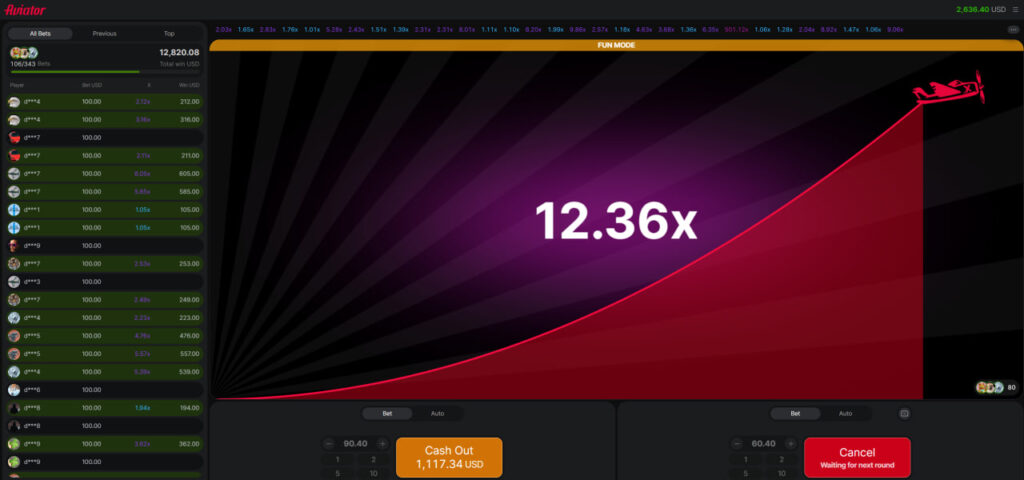
Aviator is a fast-paced “crash” game where a multiplier climbs while a plane takes off, and your goal is to cash out before the flight ends. It’s simple enough for a first-time player, but it rewards calm decision-making: every round asks the same question, “Do I take a smaller win now, or wait for a higher multiplier and risk losing the stake?” Some players casually call it an Aviator slot, but the logic is closer to a real-time multiplier game than a traditional reels-and-paylines title.
Play DEMO
Play with real money

What makes this crash game different?
At its core, the Aviator game is about timing and risk control rather than complicated rules. You place a stake before the round begins, the multiplier starts at 1.00x, and it rises until the round “crashes.” If you cash out in time, your payout = stake × multiplier; if you don’t, the stake is lost. Because rounds are short and outcomes change quickly, the Aviator game online tends to feel more interactive than many classic casino games.
Aviator’s origin story and why it got so popular
Aviator was developed by Spribe and first went live in January 2019, arriving as “instant win” and multiplier formats were gaining traction worldwide. Its popularity comes from a mix of clarity and social energy: the core mechanic is easy to grasp, while the live feed, quick rounds, and visible cashouts make the experience feel shared.
It also fits different playing styles. You can dip in for a few rounds, or play a longer session without learning new features. In an Aviator casino lobby, that flexibility matters, because players can switch between titles without a steep learning curve.
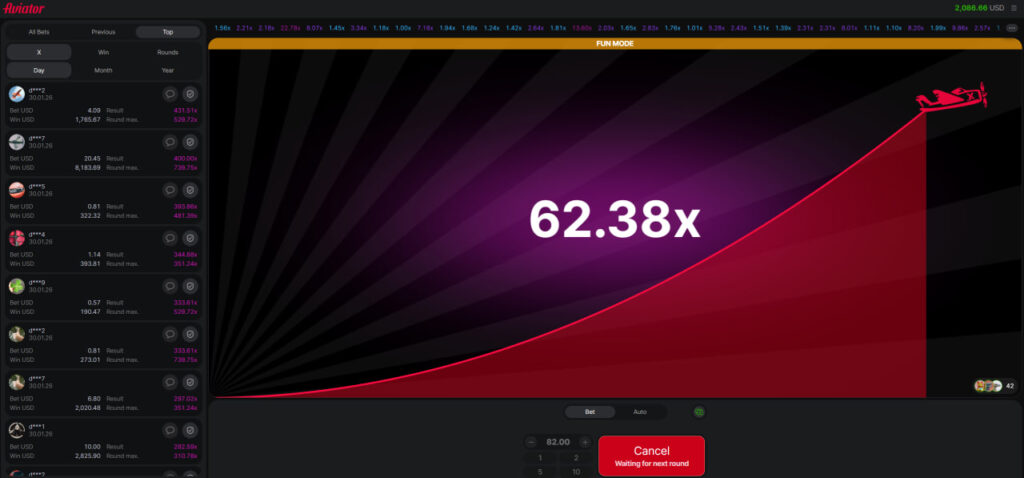
Core rules and the tools built into the interface
The basic rules fit in one breath: set your stake, place it before the round starts, watch the multiplier rise, and cash out before the plane disappears. Many versions also let you place two stakes in the same round and cash them out separately, which is useful for splitting risk. A typical Aviator bet is less about predicting a specific number and more about choosing a risk level you can repeat without stress.
- Two bets per round: You can run a “safer” stake and a “riskier” stake at the same time, then cash out each one independently. This makes it easier to lock in small wins while still taking occasional shots at bigger multipliers.
- Auto Cash Out: Set a target multiplier in advance and the game cashes out automatically if it reaches that level. It’s a practical way to avoid hesitation when rounds move quickly.
- Auto Bet: Choose a stake pattern and let the system place your bet automatically each round. This is mainly a convenience feature for players who want a steady rhythm.
- Live feed and round history: The interface typically shows recent outcomes and a live list of other players’ cashouts. It doesn’t predict future rounds, but it adds context and a social feel.
- Quick re-bet controls: Many builds include one-click options to repeat your last stake or adjust it slightly, keeping the pace smooth and the interface minimal.
Multipliers, RTP, and RNG in plain language
In crash games, the multiplier can look like it’s “growing in real time,” but the outcome is still driven by randomness. Aviator uses a random process to determine where each round will end, and the rising curve is a visual countdown to that crash point. That’s why no pattern, chart, or “signal” can reliably forecast the next round.
RTP (Return to Player) is a theoretical percentage that describes the portion of stakes paid back over a very large number of rounds. Aviator is commonly listed with a 97% RTP.
RNG (Random Number Generator) is the system that produces unpredictable outcomes; in reputable, regulated environments, RNG systems are tested and certified, and the game behaves the same whether you’re wagering small or large.
Volatility matters too. Many rounds end at low multipliers, with occasional spikes to higher values. The maximum multiplier is often listed at 10,000x, but extreme outcomes are rare and shouldn’t be treated as a realistic target for routine play.
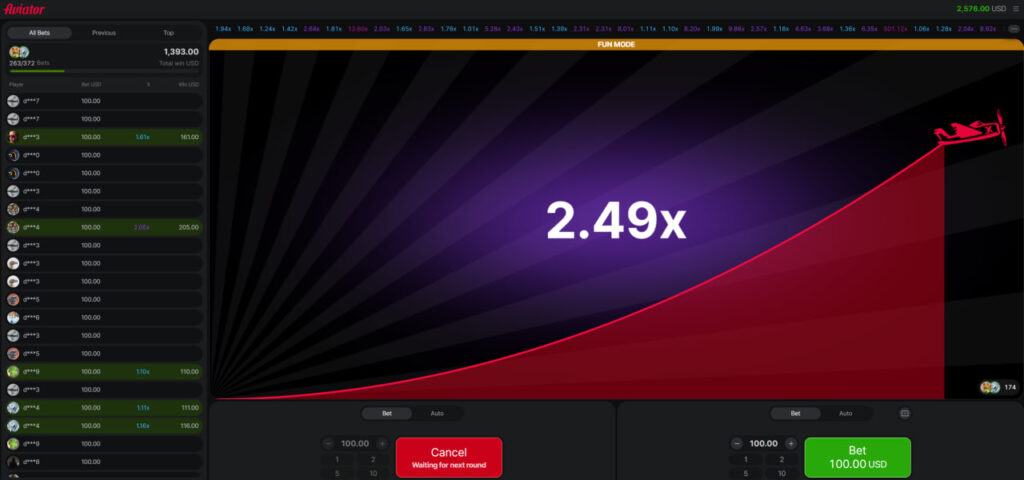
Demo mode: learning without risking money
A demo version lets you experience Aviator with virtual credits instead of real funds. The key benefit is psychological: you can practice cashout timing, learn the pace of rounds, and test tools like Auto Cash Out without feeling rushed by real stakes.
In practical terms, the only meaningful difference between demo and real-money play is the stake type. The rules, round speed, and mechanics stay the same, but emotions and decision-making often change once money is involved. Treat demo sessions as training for discipline, not as evidence of what you’ll win later.
How to start playing for real money
- Choose a licensed, reputable operator. Look for clear licensing information, transparent terms, and a track record of handling withdrawals and support properly. This matters because it affects fairness, security, and dispute resolution at your chosen Aviator casino.
- Create an account and complete verification if required. Identity checks are a standard part of regulated play and help protect both the operator and the player.
- Deposit a comfortable bankroll. Use a method you trust, and decide in advance how much you’re prepared to spend in a session without chasing losses.
- Find the game in the lobby. It’s usually listed under “crash,” “instant win,” or specialty categories rather than classic slots.
- Set your first stake and consider Auto Cash Out. A simple target like 1.3x–2.0x helps you learn the pace. Place your stake before the round starts and cash out when it fits your plan.
- Review outcomes calmly and adjust. After a short set of rounds, tweak stake size and targets based on comfort, not on trying to “beat” recent results.
If you’re playing the Aviator game online for the first time, keep the session short and focus on process: consistent stake sizes, clear cashout targets, and breaks when emotions start driving decisions.
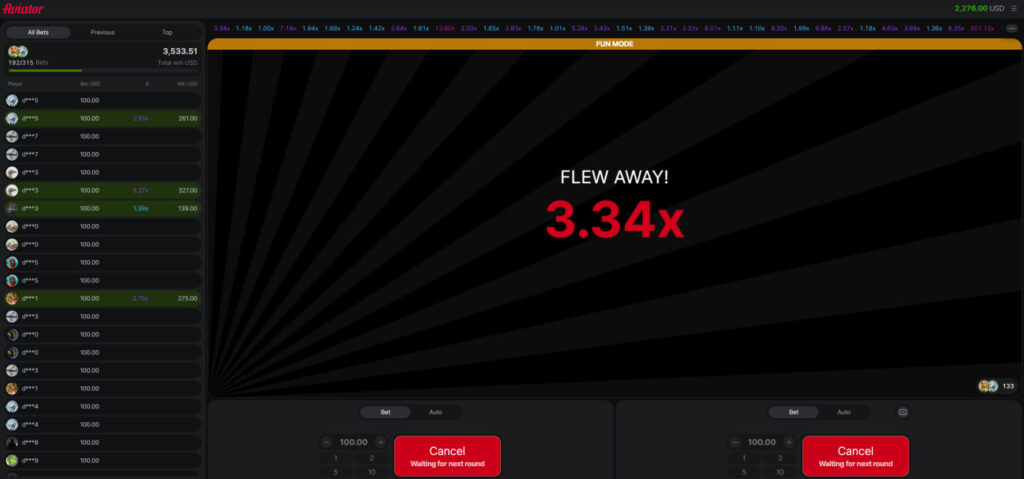
Mobile and desktop play: what to expect
Most operators offer the game via a browser-based interface that works smoothly on modern devices, so you can play without installing anything. The layout is usually optimized for touch, with large cashout buttons and clear multiplier text.
- Android: Commonly available through mobile browsers or a dedicated casino app, depending on the operator.
- iOS: Typically supported in Safari and other browsers; some operators also provide an app.
- PC (Windows/macOS): Available in standard desktop browsers, with more screen space for history and live feed panels.
If an operator offers an app, installation is usually straightforward: download it from the official source linked on the operator’s website, sign in, and enable basic security features like device locks. Avoid third-party downloads, and keep your operating system updated.
Beginner-friendly strategies and how to use them
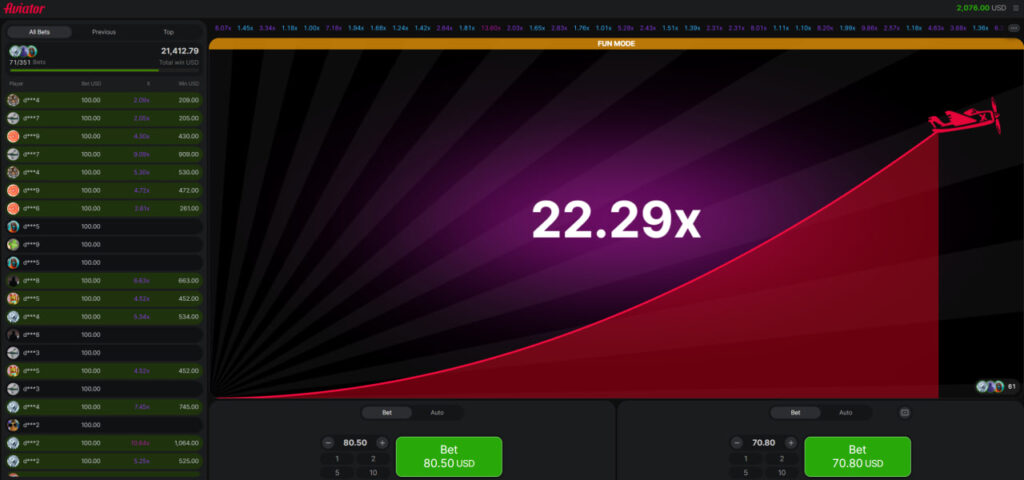
No strategy can predict the crash point, but staking structures can help you manage risk, set boundaries, and avoid emotional overbetting. The most useful approaches are the ones you can follow consistently, even after a bad run. Here’s how common systems translate into day-to-day play with the Aviator game. Before you increase an Aviator bet, decide what you’ll do after a loss, and stick to that rule.
| Strategy | How it works in practice | Best for | Main risk to watch |
| Flat staking | Keep the same stake size each round (or within a narrow range). Pair it with a modest Auto Cash Out target. | Beginners who want control and clear limits | Slow losses if you drift into long sessions |
| Martingale | Double the stake after a loss to recover on the next win at a low multiplier. | Short, tightly controlled experiments | Bankroll can blow up quickly during losing streaks |
| Labouchere | Use a sequence system: increase or decrease stake based on wins/losses against a pre-set profit goal. | Players who like structure without constant doubling | Sequence can expand and become hard to sustain |
| Ladder (the “staircase”) | Increase stake gradually after wins, reset after a loss; keep cashout targets conservative. | Building discipline and avoiding big jumps | Chasing a “perfect run” and ignoring resets |
| Split-bet approach | Use two simultaneous stakes: one set to cash out early, one set higher. | Balancing steadier returns and occasional upside | Letting the “high” bet creep up without limits |
A practical beginner plan is boring on purpose: keep stake sizes small, use conservative targets, and treat any progression system as a way to enforce structure, not as a shortcut. If you use two stakes in a round, keep the second one clearly capped so one unlucky crash doesn’t pull you into chasing.
Safety, fairness, and the Provably Fair system
Aviator isn’t inherently a scam, but your experience depends on where and how you play. The safest approach is choosing a regulated operator, checking that the game is the official build, and using strict bankroll limits. When players look for a place to play, licensing and reputation should matter more than any single interface feature.
Many crash games rely on Provably Fair methods to improve transparency. In a typical Provably Fair setup, the round outcome is generated from a combination of a hidden server seed and a player-visible (or player-chosen) value, then revealed in a way that lets you verify the result after the round. PokerNews notes that Aviator uses provably fair technology to determine crash points, which means players can validate that outcomes weren’t changed after the fact.
In practice, verification works like this: before play, you see a hashed server seed (a fingerprint). After the round, the server seed is revealed, and you can combine it with the client seed and a round counter (often called a nonce) to reproduce the same crash point. If the numbers match, the round was generated as promised. This doesn’t make the game “beatable,” but it does strengthen trust in an Aviator casino environment.
Conclusion: is it worth playing?
Aviator demo is worth trying if you like quick rounds, clear decisions, and a game where you control the cashout moment. The learning curve is gentle, and tools like Auto Cash Out can help you keep discipline when the pace speeds up. At the same time, it’s a volatile format, and the temptation to chase higher multipliers is real.
If you approach the Aviator game with realistic expectations, sensible stakes, and a firm session limit, it can be an engaging alternative to classic table games. Choose a reputable Aviator casino, start in demo mode, and treat any short-term results as variance rather than proof of a “system.”
FAQ
Availability depends on local regulation and the operator’s licensing. Some regions restrict certain suppliers or product types, so the simplest check is whether a licensed operator in your jurisdiction offers it in the crash category.

Modestas Mankus
Last updated: 10.03.2026